

La casa di terra
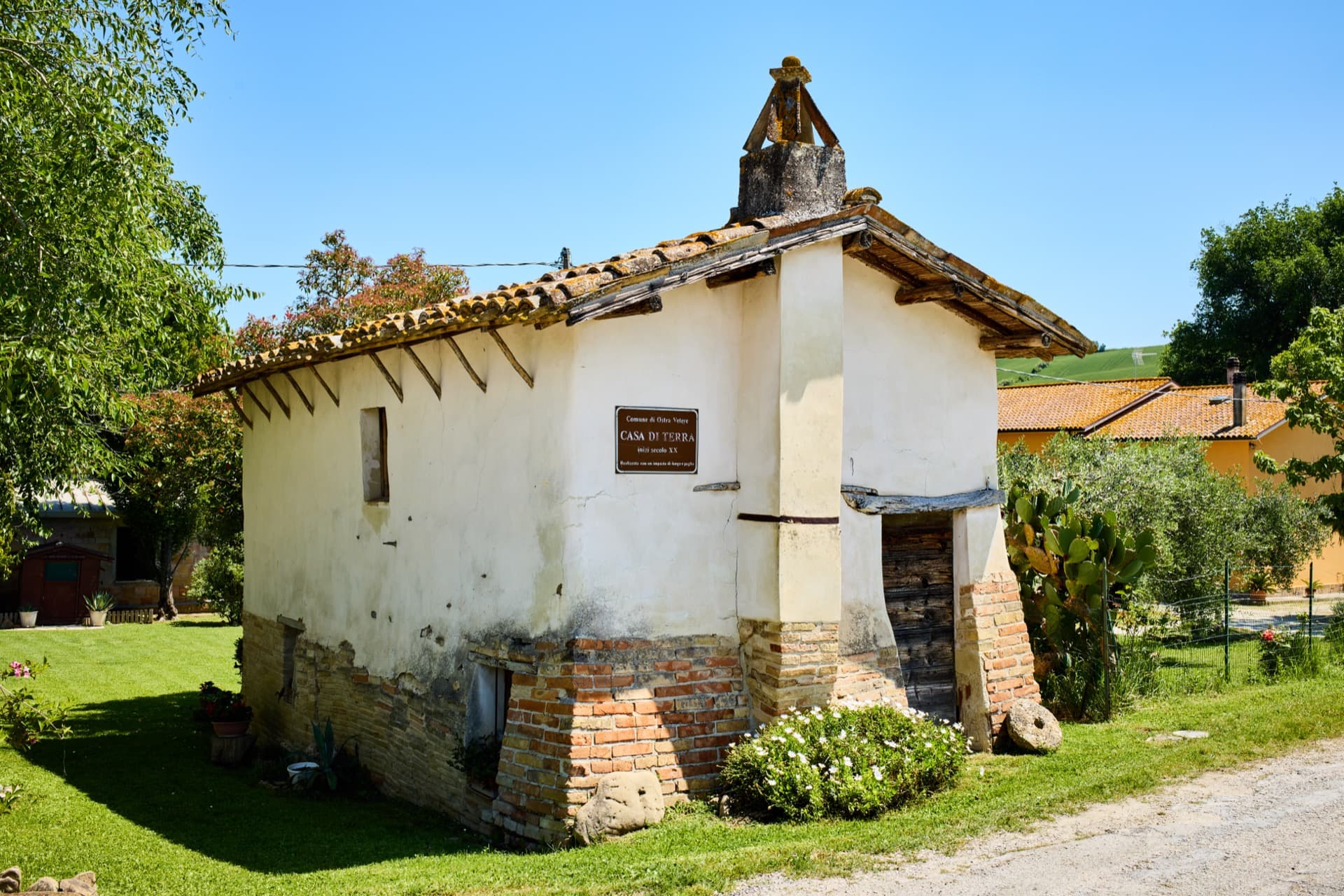
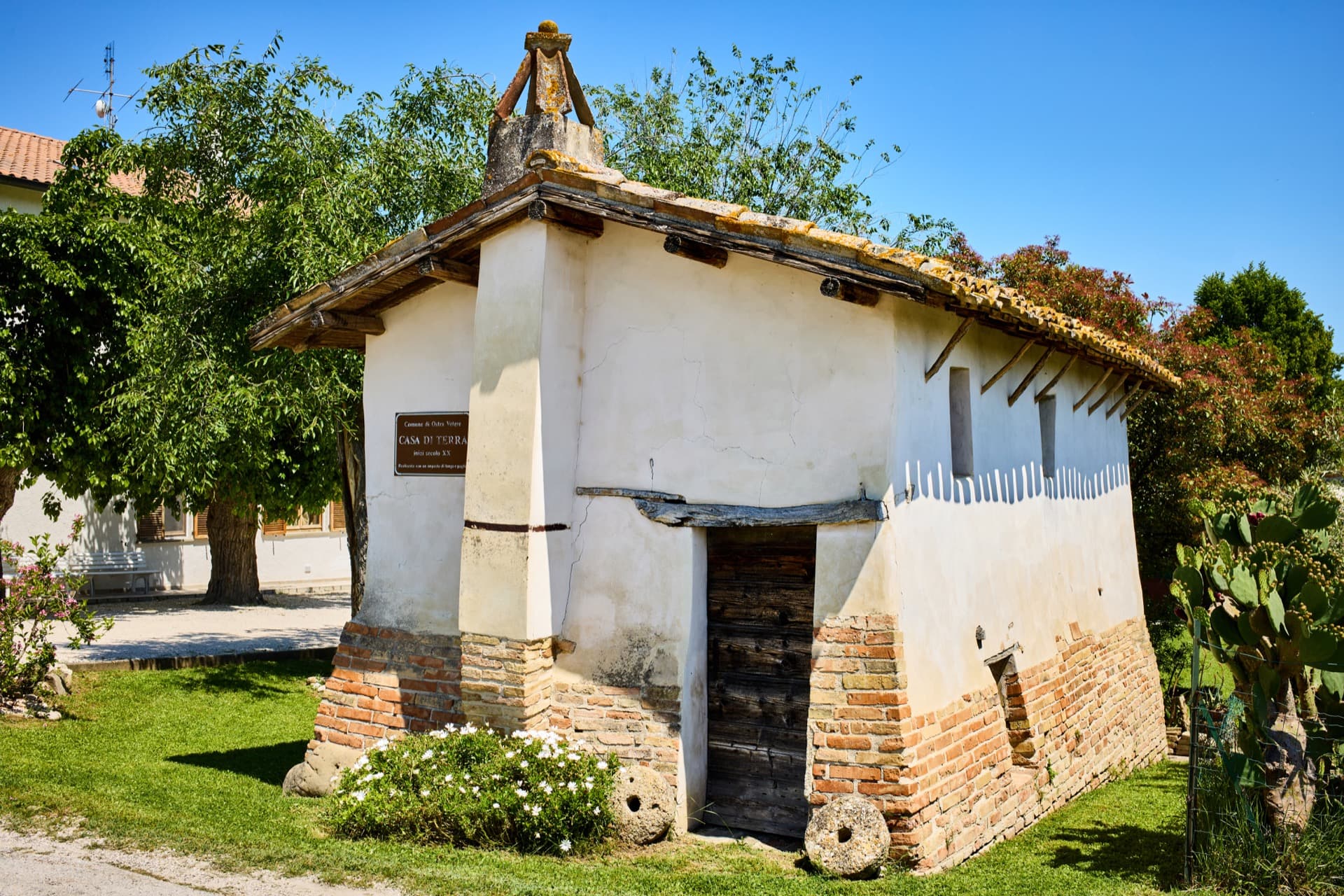
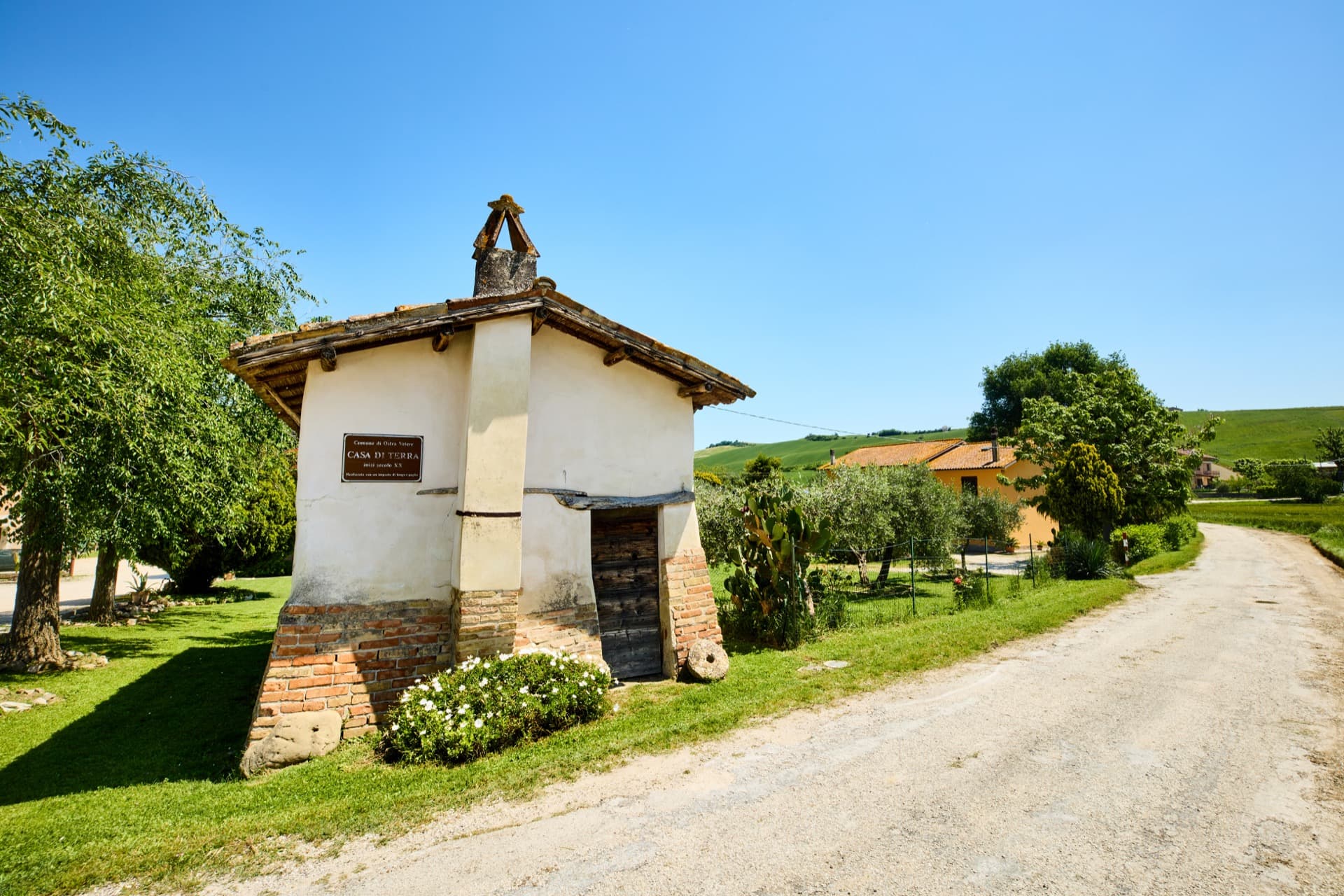
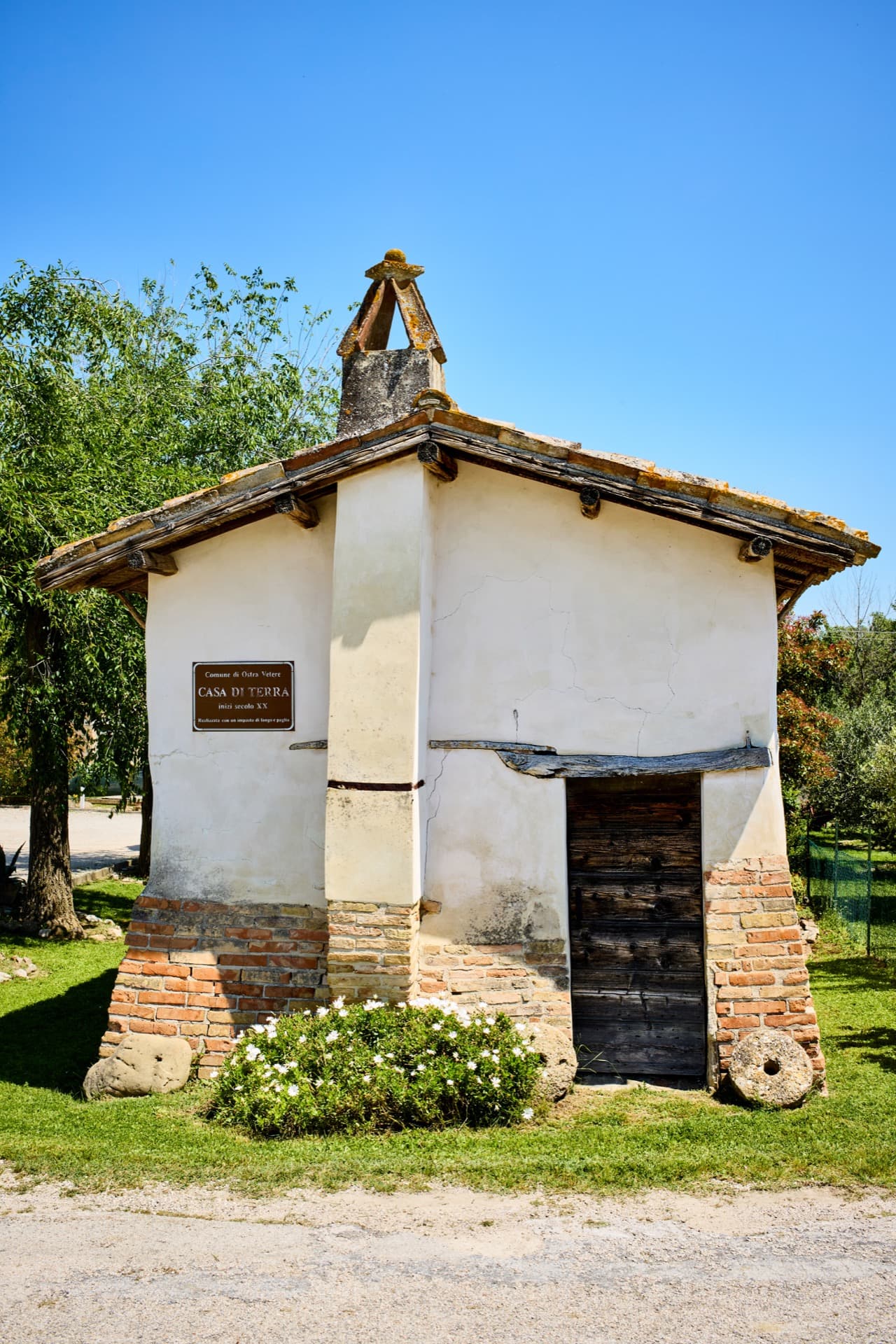
The earthen house is an example of poor architecture, evidence of the ancient technique of walling with earth mixed with straw. The current construction dates back to the early twentieth century. This construction technique is of medieval origin and housed the families of sharecroppers and seasonal workers
The Marche region boasts important evidence of the ancient technique of walling with earth mixed with straw. We find official references to this ancient and fascinating architecture since the Middle Ages and the Renaissance, in municipal statutes, cadastral maps, toponyms and surnames. These buildings are modest in size, sometimes they have only the ground floor, and the town is adjacent to the stables and cellar, other times they have two floors, with a staircase connecting them. In this case, the working rooms are on the lower floor and the living rooms above. They can be recognized, even if they are plastered, because they have very small windows, the spur of the perimeter walls, the layout of the internal rooms is irregular and the rooms are narrow and low.
Clay and straw were used to build the mud houses. Straw was joined to earth and water and was beaten barefoot in a hole, or “raw” bricks were made in it. Another element that was widely used and found in quantity was cow dung, what to put it mildly was called “vil materia”. Once the two or three elements were combined, “maltone” was obtained, a very ancient term used to indicate both the mortar and the construction technique. Maltoni were then made from raw earth and straw, also called Freemasons, which were nothing more than large loaves weighing 7-8 kilos: by mounting them one on top of the other, the earth wall was created, and with the same amount of mortar, if necessary, they were tied together. Arranged in a “knife”, that is, slightly inclined and in the opposite direction layer by layer, a “herringbone” wall was obtained which gave more stability to the construction. Ostra Vetere has a tradition of earthen houses, very interesting and well documented since the 17th century. The Ostra Vetere earthen house, in the Molino district, which has now become one of the most visited earthen houses in the northern marches, originally belonged “to a certain Luigi Gregorini, a direct farmer, who had built it around 1905¬ to 1910; it then passed through various passages to the Perlini family, who lived there until 1957. Maintained almost intact in its original typology, the house has a rectangular plan and is spread over two floors, with a central partition that forms four distinct rooms: the kitchen and stable on the ground floor and the bedrooms on the first. The connection between the two levels takes place through¬so a modest wooden staircase located close to the entrance. The vertical walls’ of the artefact are made of earth mortar and straw, with an external plinth made of slightly ‘shoe’ brick masonry. The gabled roof rests on the perimeter struts¬tures and, in the central part, in correspondence with the partition, on a wooden distribution beam with a strut on the centerpiece which interrupts the ridge beam. The intermediate floor is made of currents and above it is flat ‘dry’.
The house was purchased by the municipal administration of Ostra Vetere in the late 1980s for one million lire and subsequently restored by the Superintendency of Architectural and Environmental Heritage of Ancona. The building, appropriately marked with street signs, is open to the public year-round and can be visited free of charge.
Galleria
Dove
Scansiona il QR
Per raggiungere il punto di interesse
Contrada Molino
Distanza in macchina: 24 min RaggiungiContatti
Sito Web 
http://www.comune.ostravetere.an.it/hh/index.php
http://www.comune.ostravetere.an.it/hh/index.phpAltre Informazioni
Categorie
Monumento, Storico, Architettura
Potrebbe interessarti anche
Ostra Vetere Digital - - Questo intervento è stato realizzato con il contributo dell’Unione europea Bando POR FESR Marche 2021-2027 - Asse 1 - Azione 1.2.2 - Int. 1.2.2.2 Bando per “Servizi digitali integrati”



