

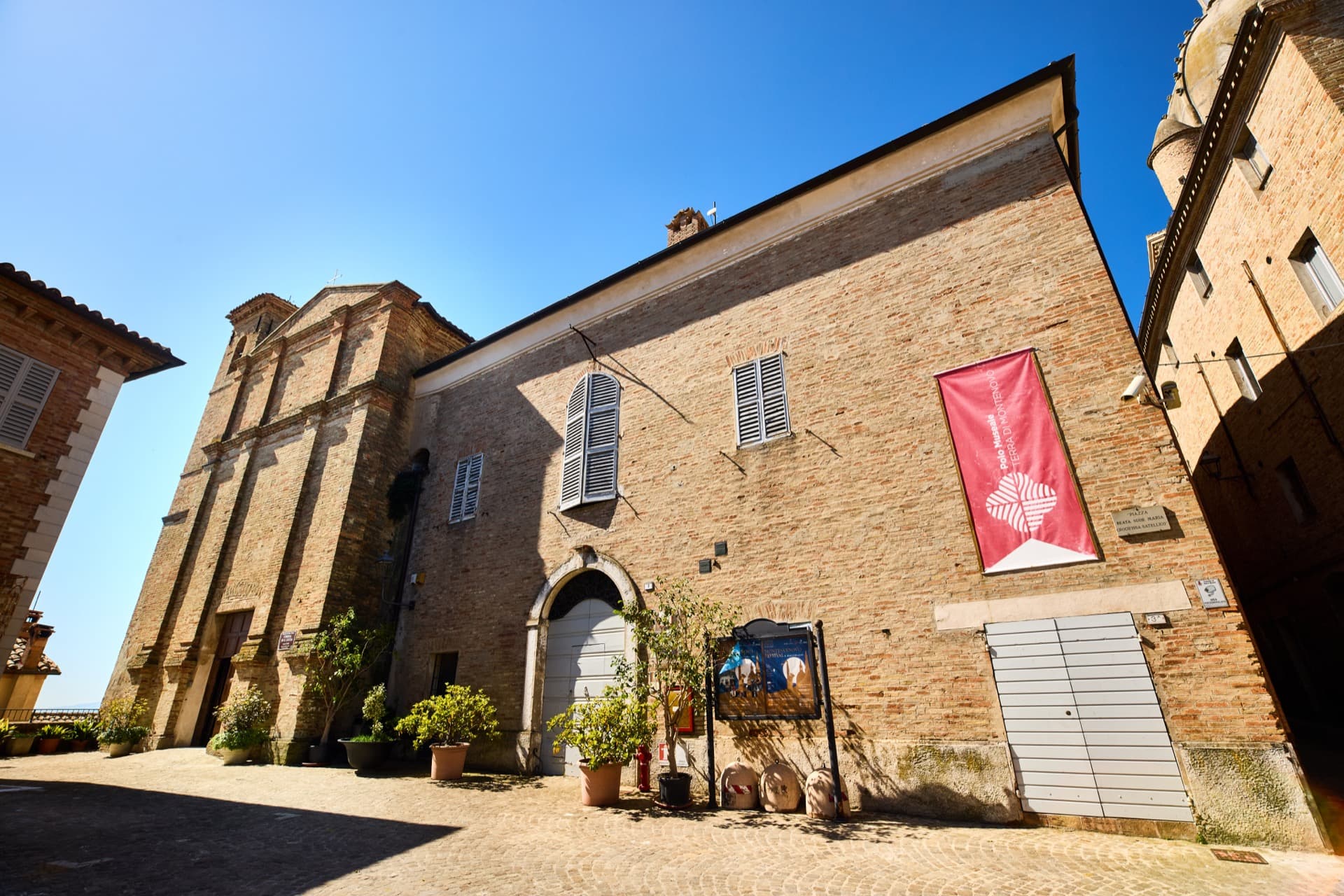
Museum center Terra di Montenovo
Formerly the monastery of the Poor Clare nuns, it passed into the ownership of the Marulli family, who made it their farm. Purchased by the Municipality, Palazzo Marulli is home to the “Terra di Montenovo Museum Centre” and houses valuable works of art, finds from the Roman city of Ostra and the collection of the Marulli Agricultural Company
The works of art that escaped destruction and dispersion and were collected here cover the broad chronological span that lasted from the fifteenth century to the eighteenth century. They are sufficient to document the privileged relationship of the faithful with a place that had to recall for a long time, together with the memory of the community’s ancient origins, examples of faith, dedication, social stability and, finally, cultural updating.
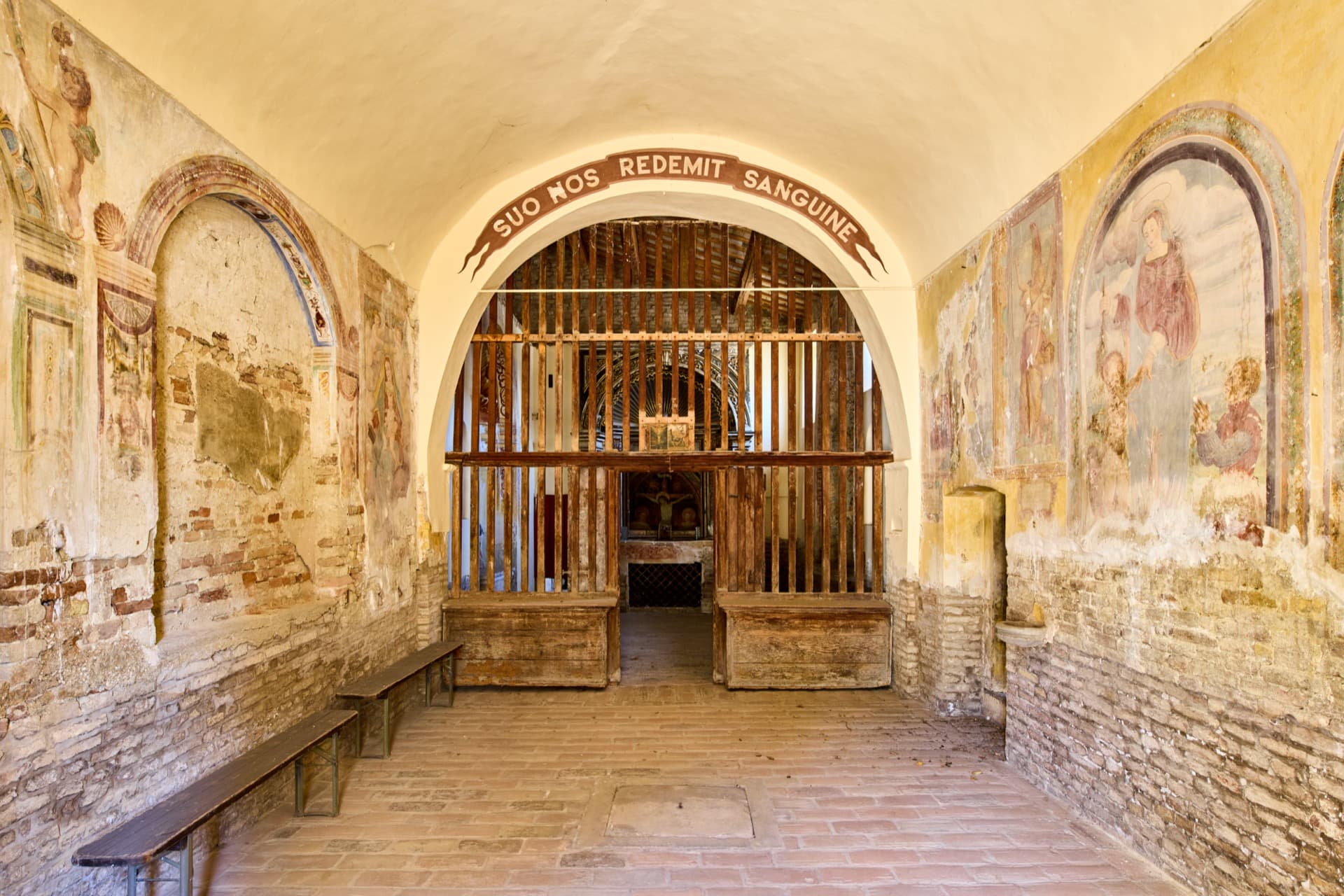
The church of San Francesco, originally with two naves, underwent a radical restoration in 1635. As the paintings in the museum attest, this involved replacing the ancient sacred images with new altarpieces, thus enabling both the updating of the iconography based on the most illustrious models of the Baroque and Ridolfian schools of art and the promotion and renewal of the cult of saints belonging to the Franciscan Order.
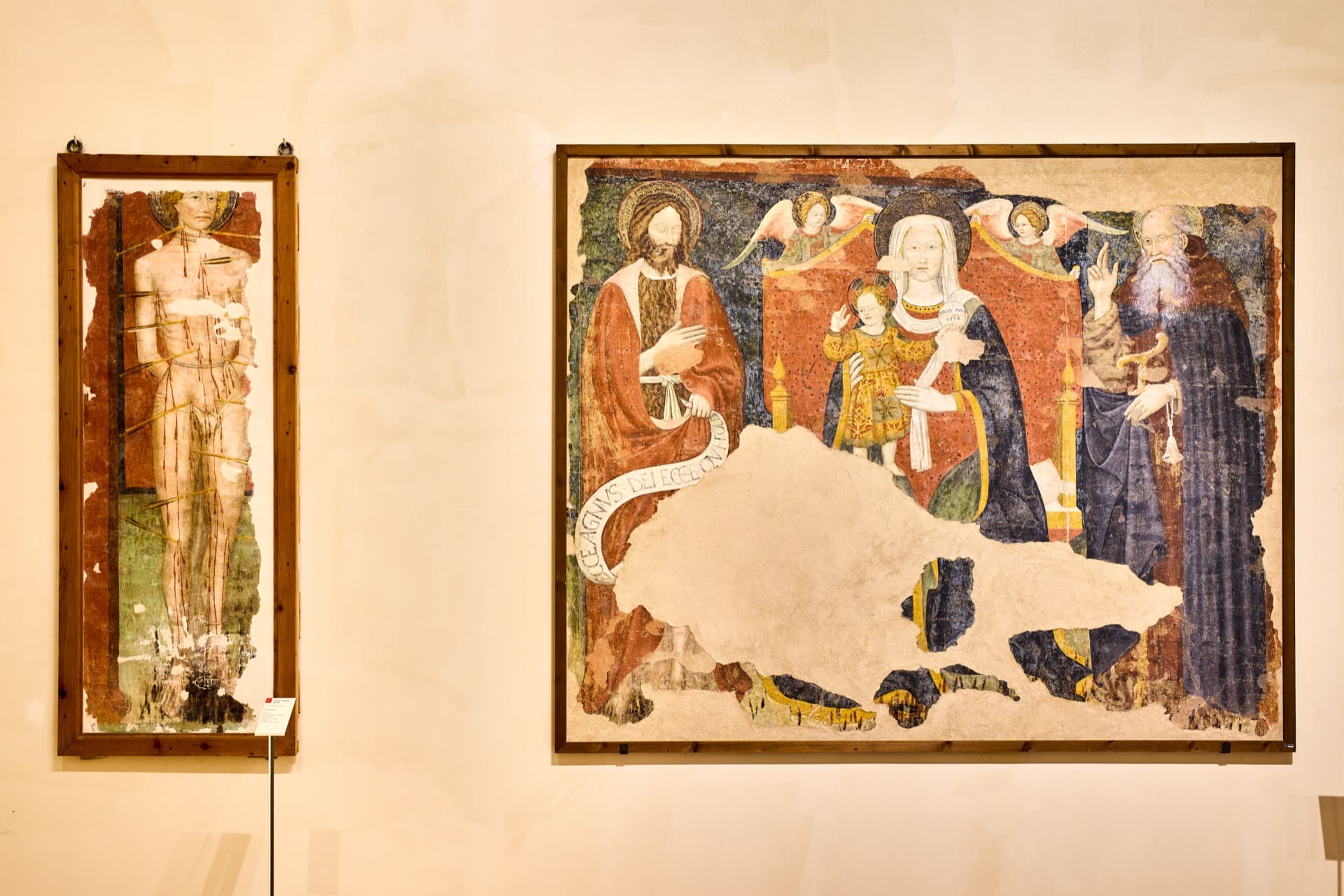
The oldest evidence of the pictorial cycle present in the previous building is most likely linked to the serious plague that ravaged the Marca around 1470. In addition to the date reported in the Virgin and Saints John the Baptist and Anthony the Abbot, the presence of Saint Sebastian, invoked for centuries against the disease together with Saint Roch, could support this hypothesis. The two frescoes are the work of the painter Andrea di Bartolo da Jesi, active at the same time in the nearby church of San Fortunato, near Serra de Conti.
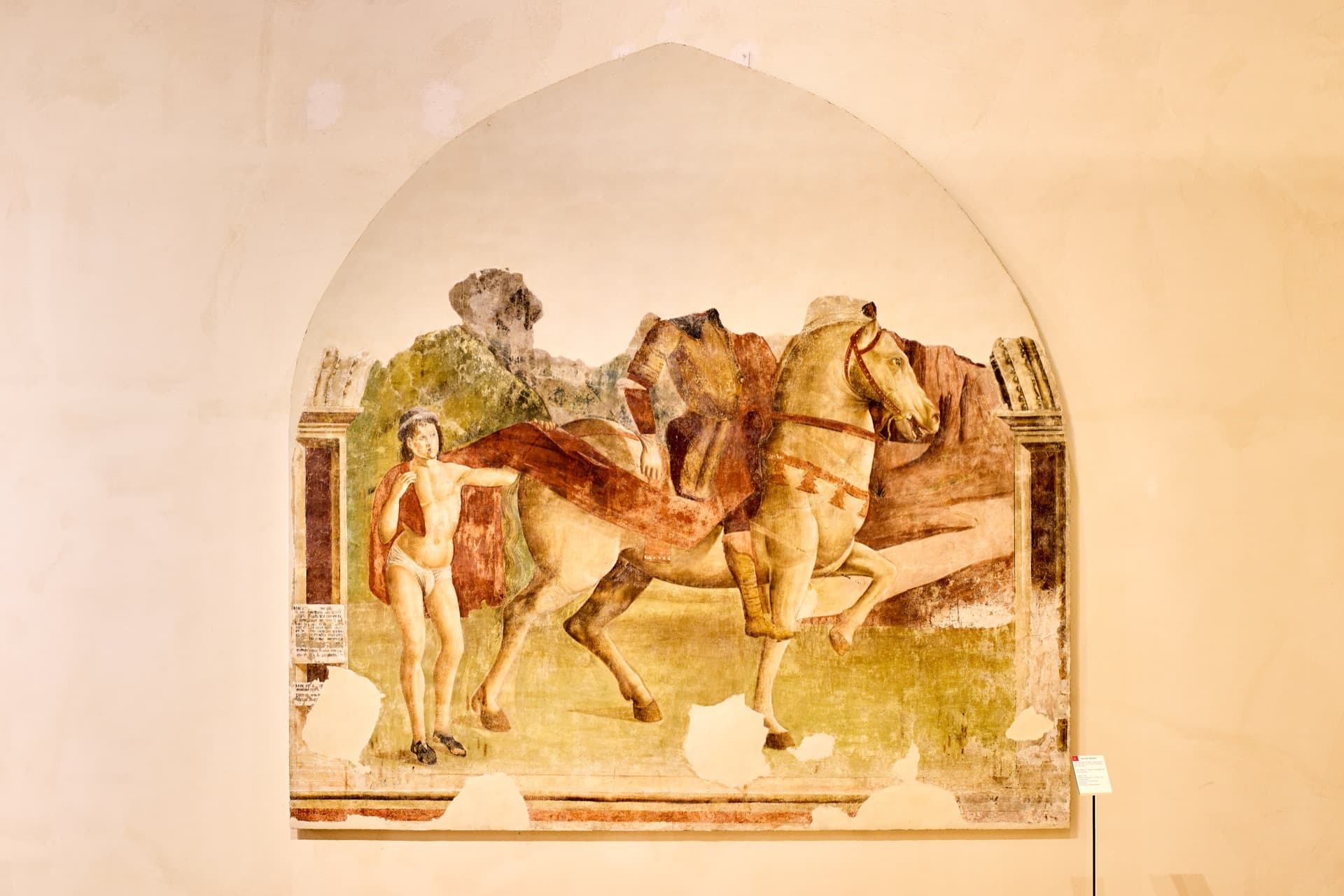
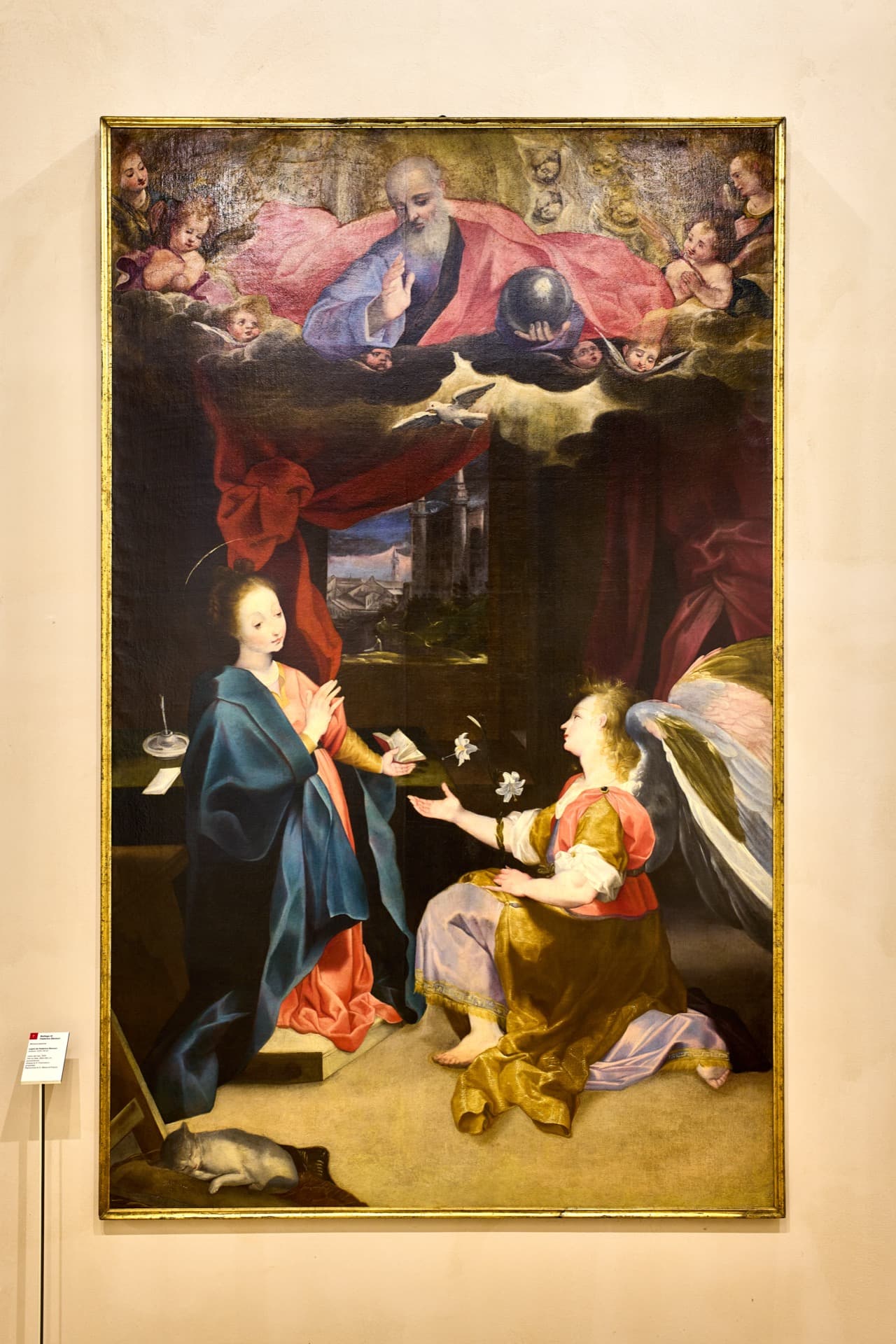
The painting with the Virgin and Saints John the Baptist and Anthony the Abbot, a work strongly influenced, in its hieratic and archaic nature, by the ways of the more famous Giovanni Antonio Bellinzoni from Pesaro, confirms the close relationship between the two artists, recently attested through documentary evidence. Two decades later, the painter of Sant’Angelo in Vado, Dionisio Nardini, resumed the decoration of the church with Saint Martin giving his cloak to the beggar and a series of saints, of which Saint Anthony of Padua remains. The Annunciation is from the workshop of the well-known Urbino master Federico Barocci.
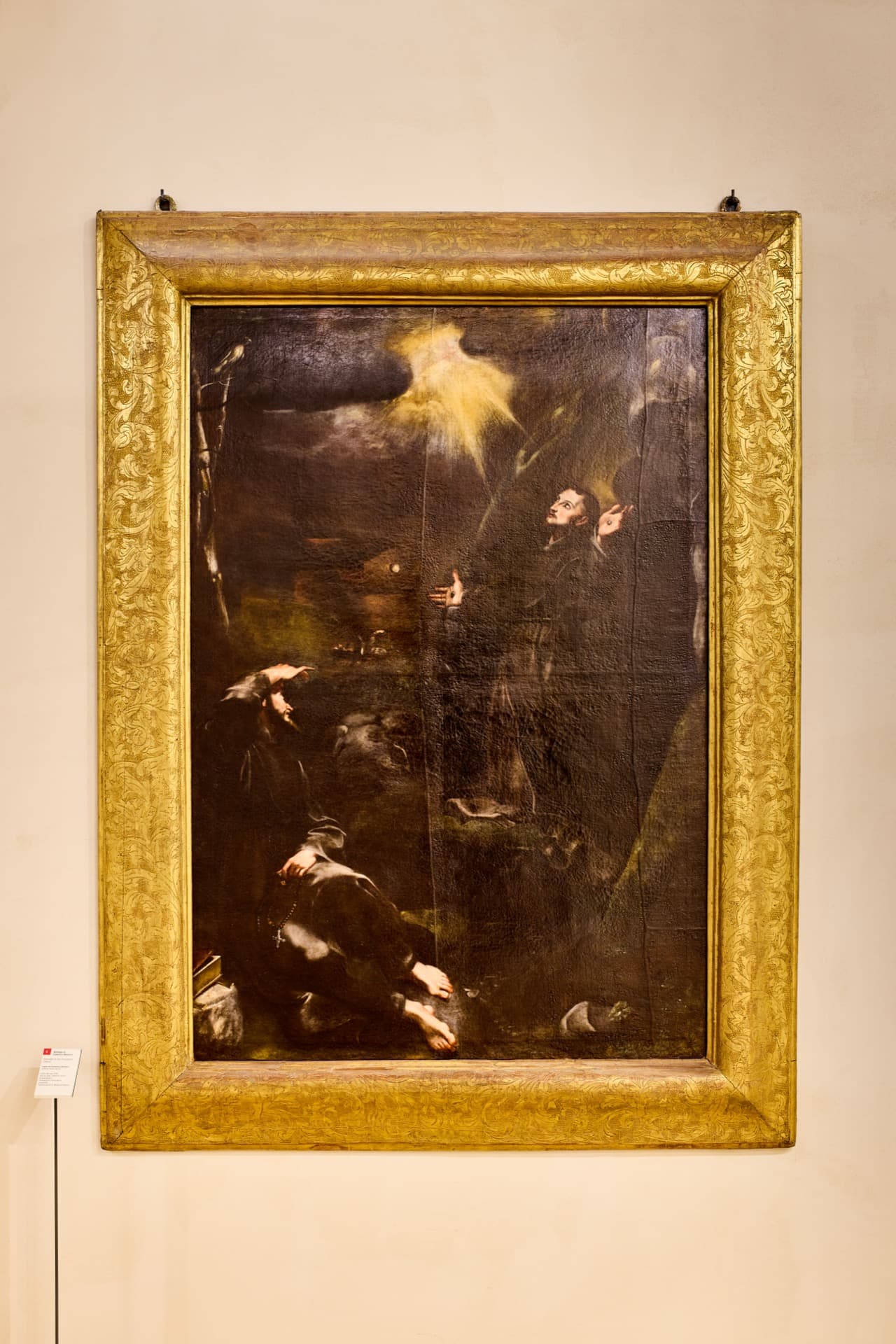
Ostra Vetere’s version can be attributed to a pupil and collaborator of Barocci, confirming the privileged relationship of the monastic community of Ostra Vetere with the Baroque workshop. There also remains the painting depicting the Stigmata of Saint Francis, perhaps originally placed in the main altar. This is a copy of the painting executed by Barocci for the church of San Francesco in Urbino. Cristoforo Roncalli, known as Pomarancio, painted Christ and Saint Peter on Lake Tiberias, an altarpiece from the abbey church of Santa Maria. The cycle of paintings in the church of the Santissimo Crocifisso includes the pair of frescoes exhibited in the museum, depicting a Glory of Angels, a surviving fragment of the Nativity of Christ, and a Pietà with Saint Joseph of Arimathea and Saint John the Evangelist. The Glory of Angels remains the only testimony of Giovan Battista Lombardelli’s activity in Ostra Vetere. The painter was born here around 1537 and the works in question document the beginning of his successful professional career, before his prolonged stay in Rome which saw him participate in some of the most important artistic projects of the time. Furthermore, the pair of polychrome terracotta panels, rare examples of a type of majolica, of a devotional nature, comes from this same church.
These plaques depicting the Nativity and the Lamentation are a rare and precious example of late fifteenth-century “majolica plastic”. They present an undoubted artistic interest, characterised by a “still Gothicising flavour, in any case of a suggestive archaism”, distinguishing themselves for their rarity and technical quality. The ceramics are part of a corpus of works, created at the end of the 15th and the beginning of the 16th century, attributable to the atelier of an anonymous artist who worked in the Romagna and Marche regions, on the Adriatic route between Faenza and Ancona.
Most of these works are preserved in the most prestigious museums in the world, testifying to the great collecting attention they have received over time for these objects, suspended between sculpture and ceramics. The size of this type of plaque often indicates its devotional use, suggesting its placement in shrines or chapels ancillary to larger buildings, as well as in small external niches protecting houses, especially those with Marian subjects or saints. Ceramic historiography has always emphasized the rarity of this plastic genre of majolica, characterizing it as an isolated and singular expression of craftsmen directly influenced by “Flemish” or at least “Nordic” stylistic features probably acquired from the cultural climate of refined and cultured courts such as those of Ferrara and Urbino.
In fact, what most links one of these works, the Lamentation, to the northern figulina art of the Marche region is the presence of the coat of arms of the Montefeltro family, lords of Urbino. Thus, for this and other works, it is right to think of a “nomadic artist”, trained in the Faenza environment, sensitive to stylistic features from beyond the Alps, wandering between Romagna and the northern Marche, where majolica has always characterized the cultural identity of a territory, between art, faith and popular devotion. In the Marche region, only one other work of the same type is preserved, the Lamentation of Saint Cyriacus in Ancona. To date, very few works belonging to this typology are known: around forty throughout the world, including plaques, caps, sculptures or high reliefs, and of these only 18 are preserved in Italy.
The collection of the Marulli Agricultural Company which preserves equipment, machinery and furnishings that once belonged to the company. Worth noting is the company’s own business archive, recently reorganized and catalogued.
Gallery
Multimedia
MUSEUM COMPLEX - Municipality of Ostra Vetere - Cast of the statue found at “Le Muracce” ENG
MUSEUM COMPLEX - Municipality of Ostra Vetere - History of the Library ENG
Wherein
Scan the QR
To reach the point of interest
Piazza Beata Suor Maria Crocefissa Satellico 3
Distanza in macchina: 26 min RaggiungiContacts
Website 
http://www.comune.ostravetere.an.it/c042036/zf/index.php/musei-monumenti/index/dettaglio-museo/museo/1
http://www.comune.ostravetere.an.it/c042036/zf/index.php/musei-monumenti/index/dettaglio-museo/museo/1Indirizzo
Piazza Beata Suor Maria Crocefissa Satellico 3
More info
Categories
Museo, Storico
You might also be interested
Ostra Vetere Digital - CUP J19B25000010002 - Questo intervento è stato realizzato con il contributo DI 45.000€ dell’Unione europea Bando POR FESR Marche 2021-2027 - Asse 1 - Azione 1.2.2 - Int. 1.2.2.2 Bando per “Servizi digitali integrati”



